
If you have ever worked in a plant with corrosive fluids, you may be aware of the fact that your piping system can either make your life easy or give you constant headaches. Your production may come to a halt simply because even a tiny section of a steel pipe gives up. Sometimes it’s rust. Sometimes it’s pitting. And sometimes it’s just one weak spot nobody noticed in time.
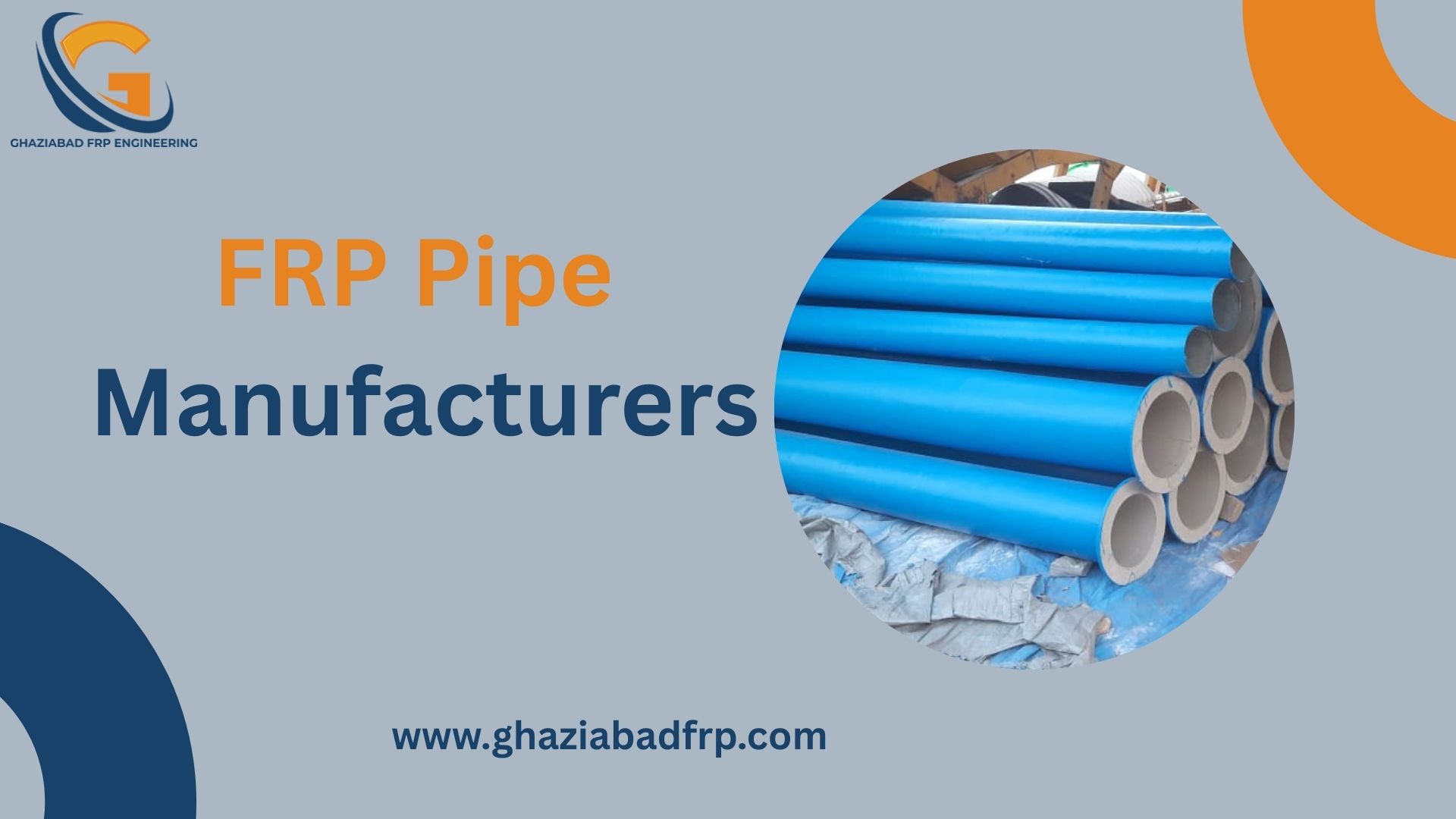
That’s exactly why many industries are now transitioning to FRP pipes. And it’s not just a trend or a fancy upgrade suggested by vendors. It’s a shift driven by necessity, and FRP Pipe Manufacturers have stepped up with solutions that genuinely solve day-to-day challenges in chemical and process plants.
Over the years, across chemical units, plating shops, pharmaceutical lines, and even paper mills, you can see this happening.
Let’s talk about why this shift is happening.
1. Superior Corrosion Resistance Across Harsh Chemicals
If you have handled acids or alkalis, you may know corrosion is a silent troublemaker. You don’t see it until it’s already too late.
FRP pipes take that fear out of the equation. Whether you’re dealing with hydrochloric acid, caustic soda, chlorine, or plating chemicals, FRP doesn’t react or weaken. It’s built for this kind of environment, which is why seasoned FRP Pipe Manufacturers highlight corrosion resistance as their biggest strength.
2. Longer Service Life with Barely Any Maintenance
This is one of the prime qualities of FRP. Once it’s installed, it behaves beautifully. No rust flakes, no thinning walls, no scaling inside the line. Plant engineers use it because it frees them from endless maintenance rounds. FRP just keeps doing its job quietly in the background.
3. Handles a Wide Variety of Corrosive Fluids
Different plants handle different mixtures, and not all chemicals behave the same way. FRP feels like a relief in comparison. It’s much lighter, which means installers don’t need massive cranes or long prep time. Alignment is easier, handling is easier, and the entire installation moves faster.
4. Strong and Lightweight
This part usually surprises people new to FRP. Even though the pipes are lightweight, they’re incredibly strong. Plus, the fiber reinforcement gives them solid mechanical strength while still staying flexible enough to absorb vibrations. For process industries that run non-stop, this combination is essential.
5. Designed to Fit Your Temperature, Pressure & Size Requirements
No two plants operate the same way. FRP understands that. It can be customised for:
- High temperatures (up to around 350°F)
- Pressures up to approx. 150 psig
- Full vacuum conditions
- And almost any diameter, from small 1-inch lines to large industrial piping networks
Good FRP Pipe Manufacturers study the actual operating conditions before designing the pipe, which reduces guesswork and increases safety.
6. Lower Downtime Because There’s No Corrosion to Worry About
Corrosion is usually the root cause behind unexpected leakages and shutdowns. Since FRP doesn’t corrode, the entire system becomes more predictable. Fewer emergency stoppages, fewer disturbances in the line, and fewer losses during peak production. Every operations team appreciates that.
Final Thoughts
When it comes to corrosive fluid handling, you don’t get many second chances. One weak spot can shut down an entire process line. FRP pipes eliminate most of those uncertainties.
Get in touch with M/S Ghaziabad FRP Engineering to make the right decision. We are one of the most reliable and trusted FRP pipe manufacturers in India.