
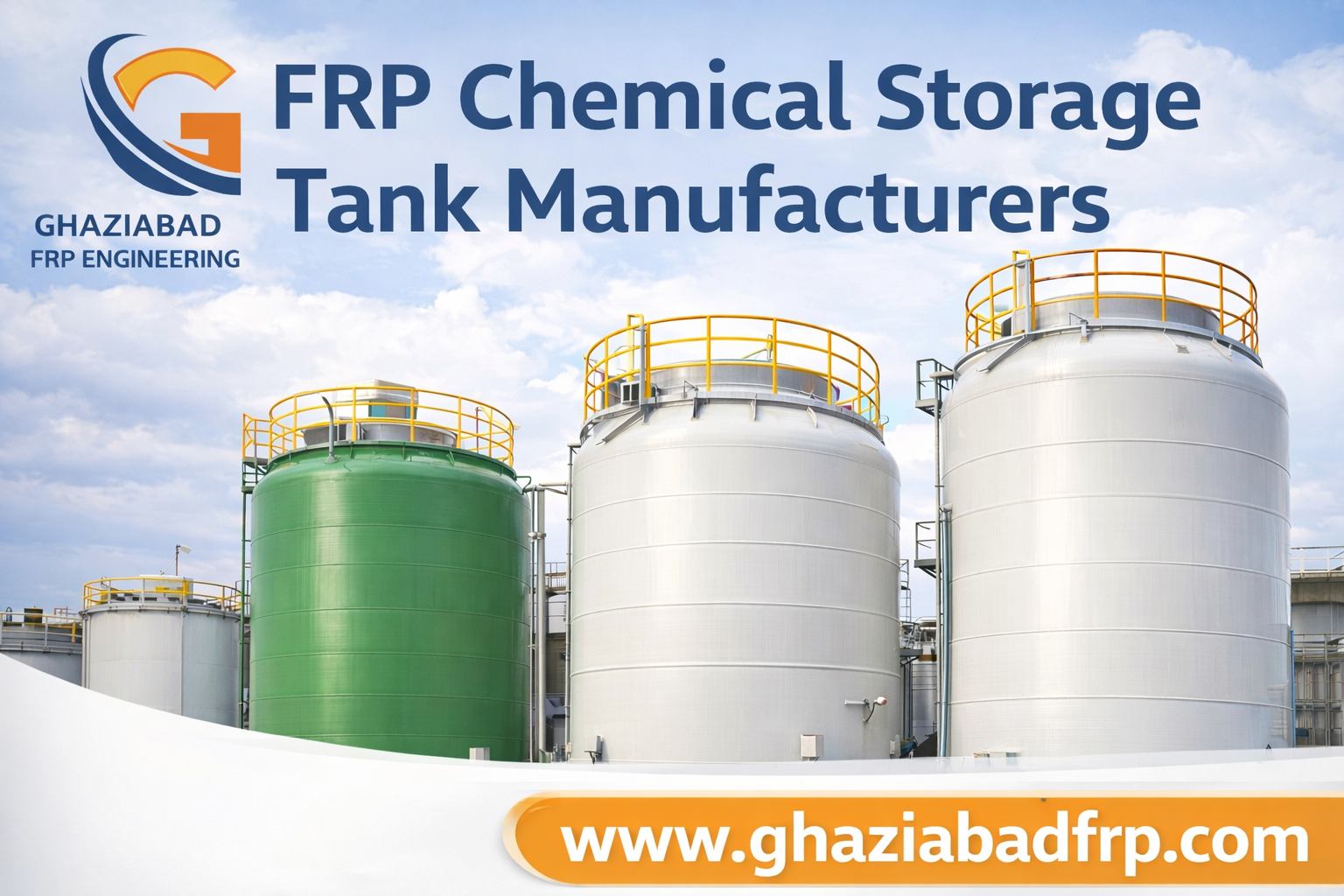
Industrial chemical storage has undergone a quiet but powerful shift. Safety expectations are higher, chemical formulations are more aggressive, and businesses are under constant pressure to reduce long-term costs without compromising compliance. In this changing landscape, FRP Chemical Storage Tank Manufacturers are witnessing a steady rise in demand as industries move away from conventional storage solutions and adopt more reliable alternatives.
At Ghaziabad FRP Engineering, we have seen this transition closely. The reasons behind it are practical, performance driven, and rooted in real operational challenges faced by modern industries.
Rising Concerns Around Chemical Compatibility
One of the strongest drivers behind this shift is chemical resistance. Traditional metal tanks often struggle with corrosion when exposed to acids, alkalis, or solvents. Even with coatings, long term exposure leads to leakage risks and frequent repairs.
FRP chemical storage tanks are engineered to resist a wide range of corrosive chemicals. By selecting the right resin system, tanks can be customized for specific chemical properties, making them a dependable choice for industries dealing with aggressive substances.
Longer Service Life With Lower Maintenance
Industries are rethinking storage investments with a lifecycle perspective rather than short term pricing. FRP tanks offer a longer operational life with minimal maintenance requirements.
Key advantages include:
- No rusting or scaling
- Reduced need for protective linings
- Fewer shutdowns for repair work
- Stable performance across varying temperatures
This combination directly translates into lower operational interruptions and predictable maintenance planning.
Cost Efficiency Over the Long Term
While initial costs may appear comparable to other materials, FRP tanks prove more economical over time. When maintenance expenses, replacement frequency, and downtime losses are considered, FRP tanks deliver clear financial advantages.
Design Flexibility for Modern Facilities
Another reason industries are making the switch lies in design adaptability. FRP tanks can be manufactured in various capacities, shapes, and orientations to suit site specific constraints.
Vertical or horizontal configurations, integrated nozzles, customized manholes, and specific wall thicknesses allow seamless integration into existing plants. This flexibility has positioned FRP Chemical Storage Tank Manufacturers as solution providers rather than just equipment suppliers.
Alignment With Environmental and Safety Norms
Regulatory bodies are tightening norms related to chemical storage safety and environmental protection. Leak prevention, structural stability, and chemical containment are now non negotiable.
FRP tanks support compliance by offering:
- Leak resistant construction
- High strength to weight ratio
- Better structural integrity during seismic or load stress
- Compatibility with secondary containment systems
Industries aiming to future proof their operations are choosing storage systems that meet evolving regulations without frequent retrofitting.
Growing Acceptance Across Industries
The shift toward FRP tanks is not limited to one sector. Chemical processing units, pharmaceutical manufacturers, water treatment plants, food processing facilities, and fertilizer units are increasingly standardizing FRP storage systems.
This broad acceptance reflects trust built through consistent performance and proven reliability across diverse applications.
Conclusion
The movement toward FRP chemical storage tanks in 2026 is driven by performance, safety, and long term value rather than trends alone. As operational risks grow and efficiency becomes critical, industries are prioritizing smarter storage investments.
At Ghaziabad FRP Engineering, we continue to support this transition by delivering engineered solutions tailored to real industrial needs. As FRP Chemical Storage Tank Manufacturers evolve their designs and manufacturing practices, businesses that adopt these solutions today position themselves for safer, more efficient, and more sustainable operations tomorrow.