
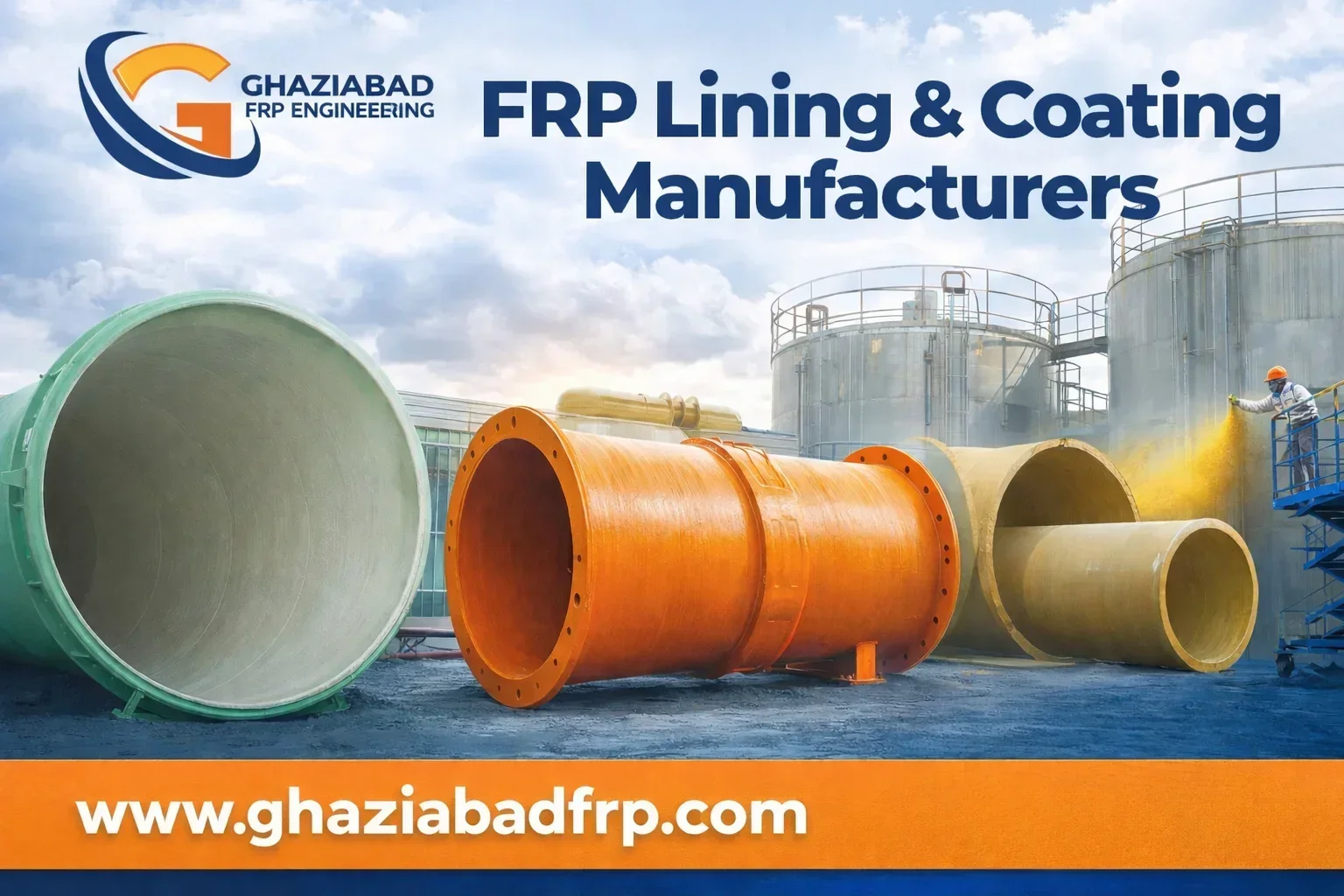
In many factories, tanks and pipelines do a very important job. They store chemicals. They move water, acids, and other liquids from one place to another. These systems run almost all day. But there is a problem.
Over time, chemicals and moisture start damaging the surface of tanks and pipes. Rust appears. Small cracks form. If nothing is done, leaks can happen, and the equipment may fail. This is where FRP lining and coating help.
What is FRP Lining and Coating?
FRP stands for Fibre Reinforced Plastic, made using special resin and fibreglass. Its lining and coating in pipelines or tanks create a strong shield to protect the surface. This is the reason businesses of all sizes and segments tend to partner and work with FRP Lining & Coating Manufacturers and keep their materials and equipment long-lasting and safe.
Let’s explore the top reasons to understand how FRP lining and coating extend the life of industrial tanks and pipelines.
1. It Prevents Rust
Rust is one of the most critical challenges for pipelines and metal tanks. If metal comes into contact with chemicals or water, it starts corroding. But if you apply FRP lining on the surface with a strong layer, it will stop water and chemicals from touching the metal directly. So, rust cannot spread easily, and your tank will last longer.
2. It Protects Against Strong Chemicals
Factories and manufacturing plants have to store industrial chemicals, acids or other harsh liquids often. This leads to damaging coating or ordinary paint fast. FRP systems are designed to handle these tough chemicals. Special resins inside the coating help resist chemical reactions.
So, most of the chemical treatment plants or manufacturing facilities work with FRP Lining & Coating Manufacturers. This allows them to have safe storage systems.
3. It Helps Resist Leaks
There is no doubt that even a small crack in the tank can hamper your business and cause massive problems in industrial plants. You should take it seriously. The best part is that FRP lining can form a smooth and continuous layer inside the tank or pipeline, sealing gaps on the tank surface. As a result, the chances of leakage become much lower.
4. It Makes Tanks & Pipes Stronger
FRP works as a coating and fibreglass reinforcement solution.
- Fibreglass can add additional strength to the structure.
- Tanks and pipelines can tolerate vibration, pressure and temperature changes.
- Plus, extra strength can extend the working life of older equipment.
5. It Reduces Repair Work
Frequent repairs can be expensive for any factory. Maintenance also means stopping production for some time. FRP lining and coating systems are built to last for many years. Once applied properly, they need very little maintenance.
This is one reason industries prefer working with reliable FRP Lining & Coating Manufacturers for long-term protection.
6. It Works on Different Surfaces
Industrial tanks and pipelines are made from different materials, such as steel, concrete or metal alloys. The good news is that FRP lining can be applied to many types of surfaces, such as:
- Steel tanks
- Concrete pits
- Chemical pipelines
- Industrial vessels
The coating bonds strongly with these surfaces and creates a durable protective layer.
7. It Saves Replacement Costs
If you want to replace a large tank or a long pipeline just for a small damage, it will cost you a lot of money. You may have seen a strong structure with a damaged or low-grade inner surface. By applying FRP lining, you can repair the surface without replacing the entire system. With this, you can save a lot and continue using your existing equipment safely.
Conclusion
Industrial tanks and pipelines work in very demanding conditions. Chemicals, moisture, and pressure can slowly damage their surfaces. For many industries, working with experienced FRP Lining & Coating Manufacturers is a practical way to protect tanks and pipelines and keep operations running smoothly for years.
M/S Ghaziabad FRP Engineering is a leading provider and supplier of FRP lining and coating solutions. Contact us to create a strong protective layer and prevent corrosion and leaks.